The TAIYO SHEET Road Heating Method is registered in
NETIS (New Technology Information System) ,
a national government-operated technology evaluation system
administered by Japan's Ministry of Land, Infrastructure,
Transport and Tourism (MLIT) ,
the authority responsible for public infrastructure
and transportation in Japan.

For all environments
Delivering optimal temperatures.

For all environments
Delivering optimal temperatures.


Opening a new era,
Carbon fiber sheet.
TAIYO SHEET_RH is
Japan's historic Japanese paper and
Combination of carbon materials
Innovative road snow-melting equipment.
With a different vertical insertion method than the conventional method,
Significant cost reductions and shorter installation times are realized.
Utilizing the excellent snow-melting function,
General roads and highways.
We provide new value in the infrastructure environment.
Construction
methodConstruction method
TAIYO SHEET Road Heating Method is registered with NETIS.
The TAIYO SHEET Road Heating Method is registered in NETIS (New Technology Information System),a national government-operated technology evaluation system administered by Japan's Ministry of Land, Infrastructure, Transport and Tourism (MLIT),the authority responsible for public infrastructure and transportation in Japan.
The joint developer, the Metropolitan Expressway Company of Japan,a government-affiliated operator of major urban expressways in the Tokyo metropolitan area,published and commercially released the official "Guidelines for Design and Construction of Annexes, Part 10 [Road Heating Facilities]" in June 2025,in which the design and construction methods of TAIYO SHEET_RH are formally standardized.NETIS Registration No.: HR
HR-240016-A
Innovative longitudinal insertion method that does not remove the pavement.
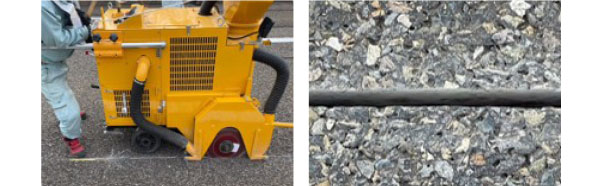
Conventional road heating process requires stripping asphalt, laying electric heating wires across the entire width, and resurfacing. However, TAIYO SHEET_RH has realized an innovative process that only requires cutting and inserting a trench width of approximately 20 to 30 mm into the asphalt.
Construction image of TAIYO SHEET_RH
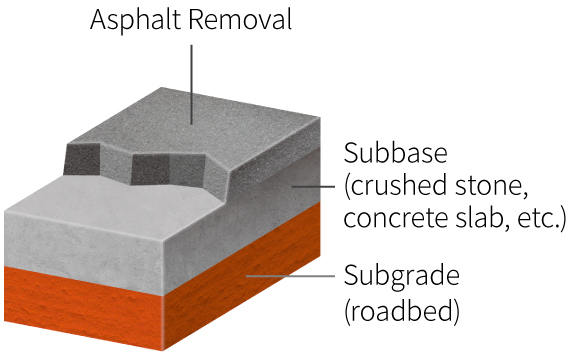
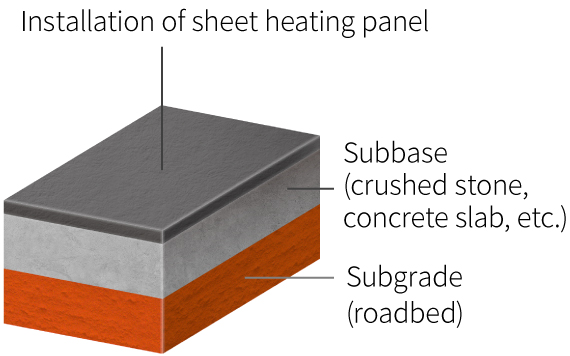
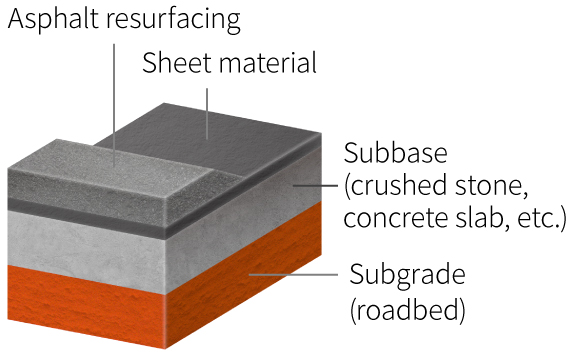
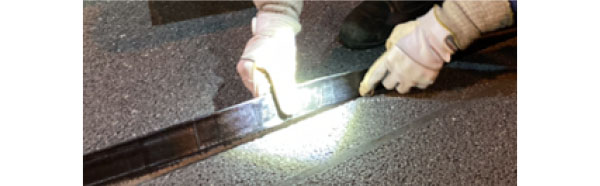
A trench approximately 20 to 30 mm wide and 65 to 90 mm deep is dug against the road surface, and the sheet is placed vertically within the trench. There is no need to remove asphalt from the entire surface of the road surface.

-
❶ Remove asphalt
-
❷ Install the surface sheet horizontally.
-
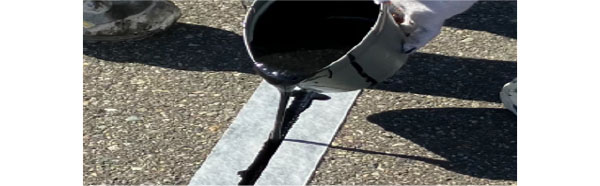
❸ Pour asphalt again
- Sheet heating temperature range
- 10 to 60°C
Surface temperature range varies depending on ambient temperature
Construction is simplified through a structure that takes advantage of a new material that is both thin, light, strong, and non-corrosive.

Road Heating Installation Procedure
FeaturesFeatures
Simplified construction shortens construction period and reduces costs.
By greatly simplifying the construction process through the vertical-installation method, there are various advantages such as shortened construction period and cost reduction.
The new construction method realizes speedy construction of 100m/day. than other companies' products.Construction period can be shortened by approximately 75%Because of,Minimize impact on drivers and traffic The system can be used for a wide range of applications. Especially for construction on roads, it significantly reduces the time required for traffic control and reduces the risk of traffic congestion and road closures. Furthermore, flexible construction on private company premises is possible, taking advantage of weekends and other holidays.
◎m per day
-
conventional
conventional
Approx. 25m
(per day) -
new method
new method
about100m
(per day) -
Construction time per day
about75%shortening
Because the new method using TAIYO SHEET_RH eliminates the process of removing and resurfacing the road surface layer,Significantly lower initial costsIn addition, because the heat is generated only at the vehicle tracks, electricity consumption is about 1/3 of other electric snow-melting equipment. In addition, because only the vehicle wheel track generates heat, electricity consumption is about 1/3 of that of other electric snow-melting equipment, reducing not only initial costs but also running costs.
Electricity consumption
Other electrical snow-melting equipmentabout1/3the following
EffectEffect
With anti-freeze and snow-melting effects,
Prevents vehicles from getting stuck due to heavy snowfall.
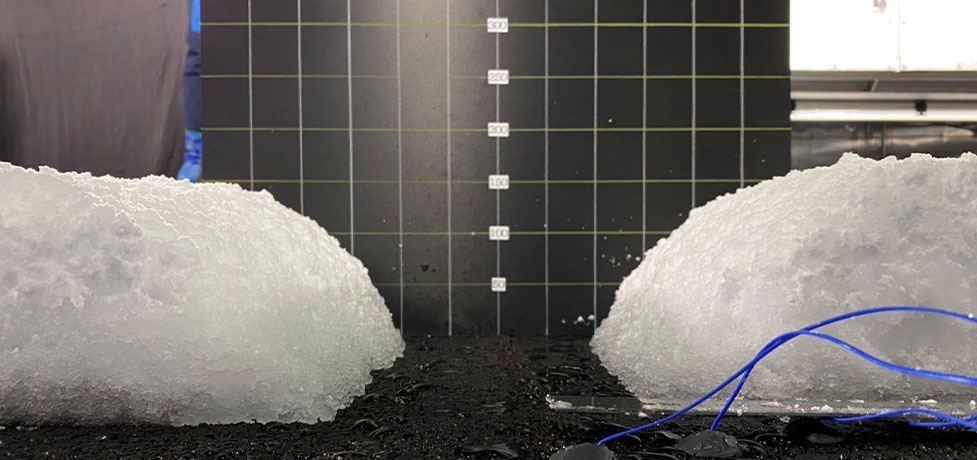
The snow-melting effect is about 20 to 30 cm centered on the installed ditch, and the melted water melts the surrounding snow and expands the area. (The effect varies depending on the amount of traffic.) Even if snow is piled up, the road surface (the lower layer of snow) is still in a state of sherbet due to the thermal effect, so it is better to allow vehicles to drive on the road without stopping traffic to increase the extent of snow melting and prevent getting stuck.
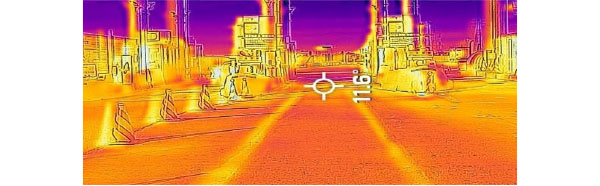
●Temperature change by thermography
After the TAIYO SHEET_RH installation was completed, the temperature rose to 40°C (heater temperature) within a few minutes from the start of heating.
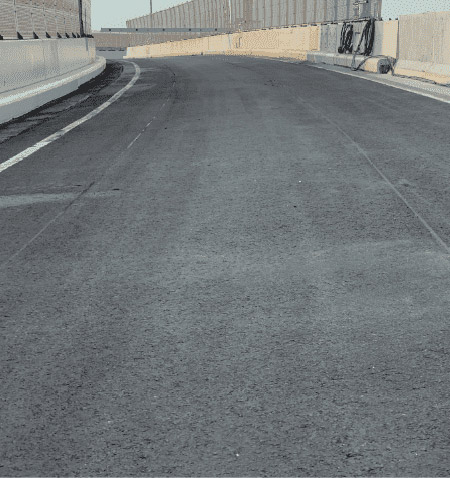
Completion of construction
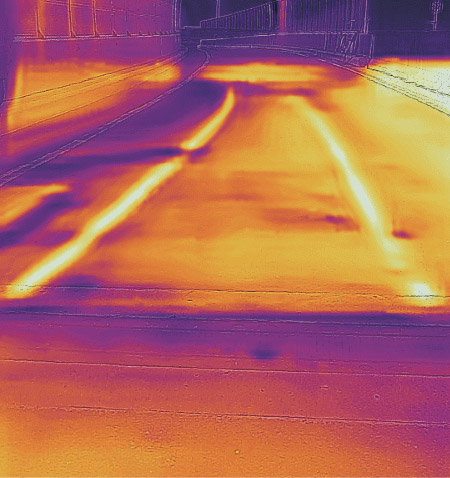
Speedy heat generation
●Snow and Ice Research Center
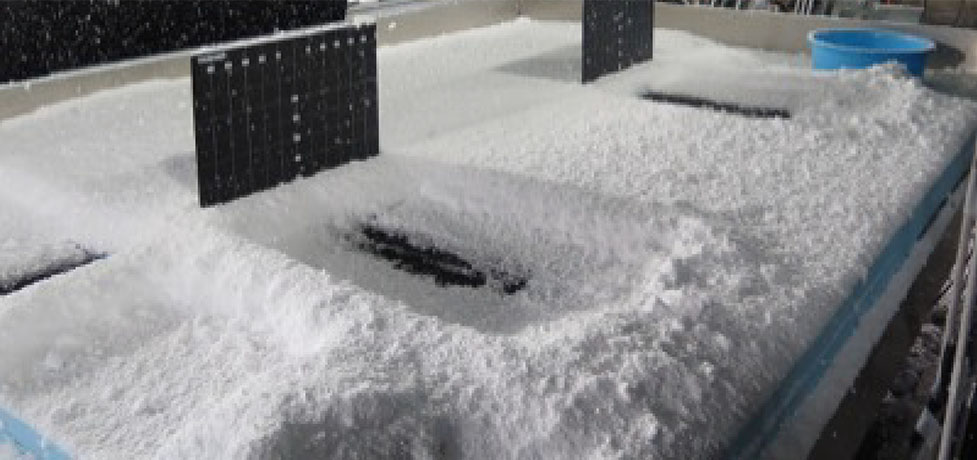
Tests at the Shinjo Snow and Ice Environment Laboratory
We conduct continuous experiments every year at the world's only facility capable of producing artificial snowfall under conditions that are as close to the natural environment as possible.
●Effect of TAIYO SHEET_RH
Images from a fixed-point camera (Route 8, Yoneyamadai, Kashiwazaki City, Niigata Prefecture)
Introduction
exampleIntroduction
example
-
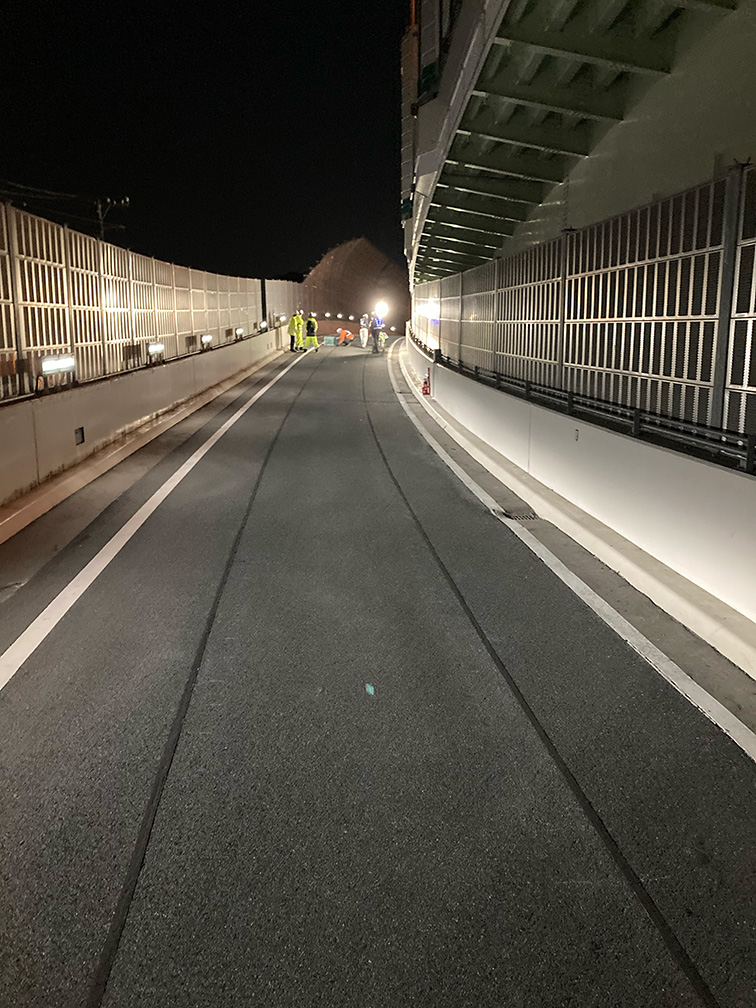
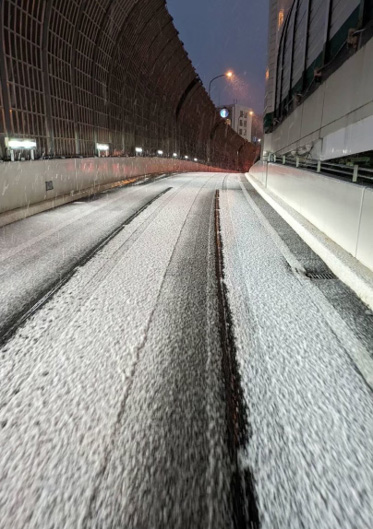
Metropolitan Expressway Central Loop Route
Oji South EntranceYear of construction:
February 2024Construction site:
Tokyo -
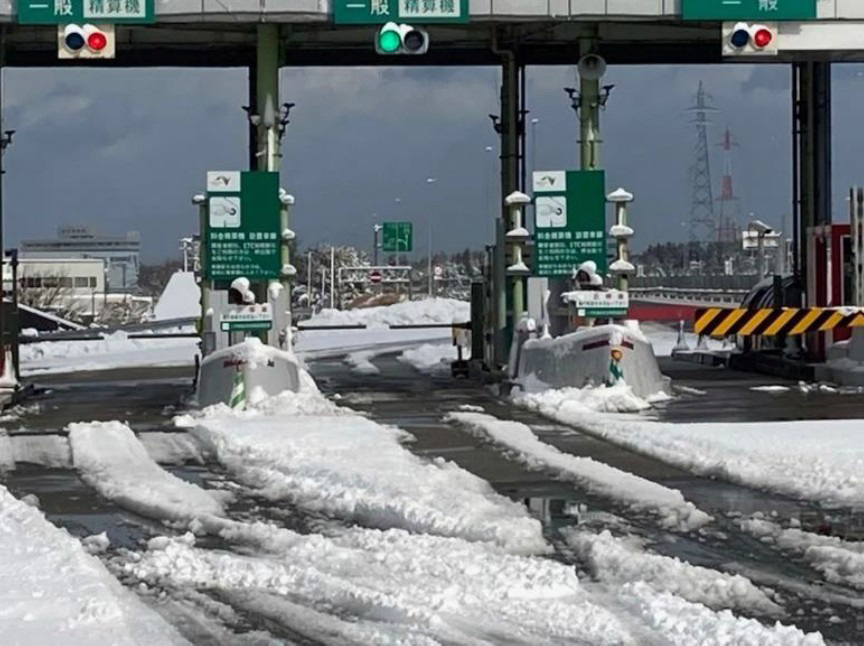
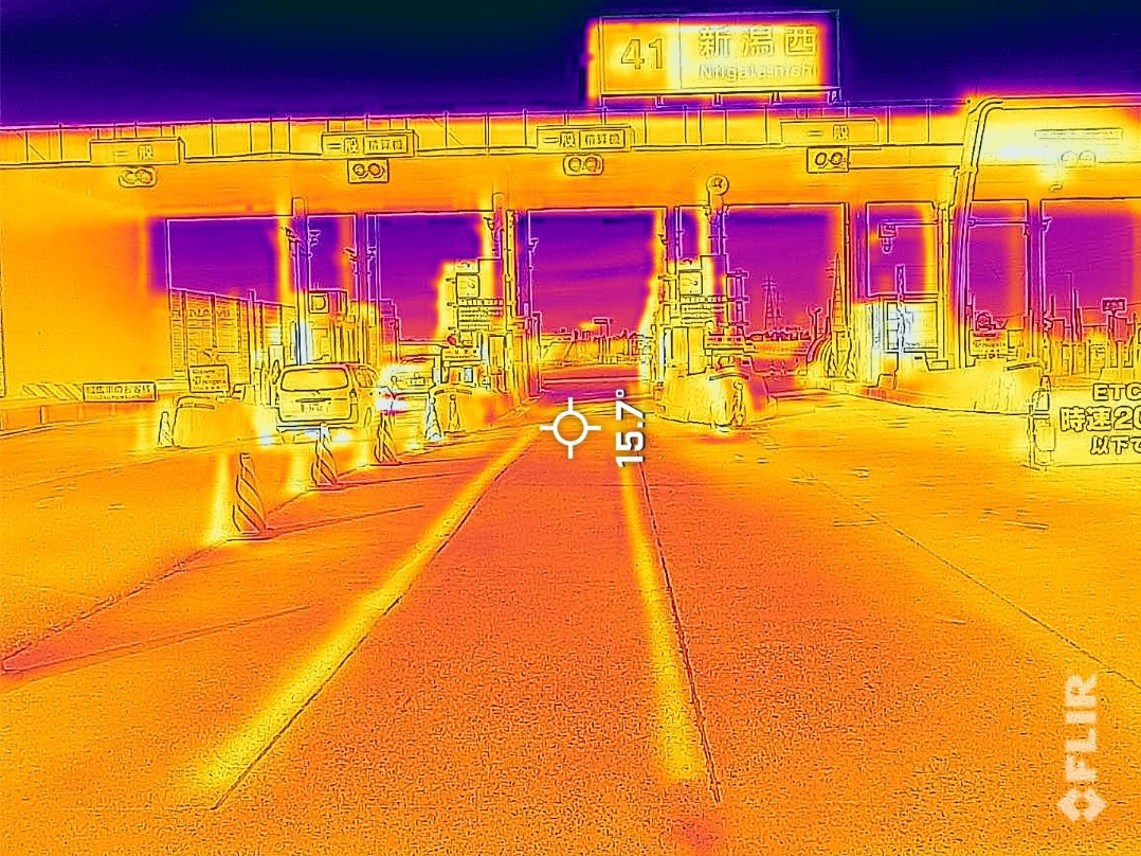
NEXCO East Japan Hokuriku Expressway
Niigata West Toll Station No.1Year of construction:
February 2020Construction site:
Niigata -
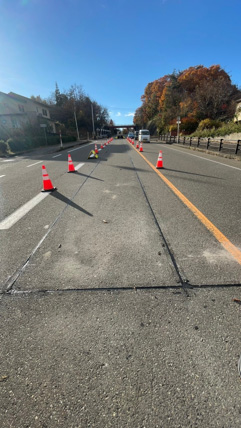

Hokuriku Regional Development Bureau, MLIT
Nagaoka National Highway Office, Route 8
Yoneyamadai, Kashiwazaki CityYear of construction:
November 2023Construction site:
Niigata